
If you follow the early teer sessions, the khanapara morning teer result is one of the first outcomes declared each day. Played in the Khanapara area near Guwahati, this morning session brings together archers, ticket holders, and thousands of online followers who check the two round outcomes before midday. This guide explains everything a beginner or regular follower needs to know: what the morning session is, how the first and second rounds work, when the results are usually declared, how to read the two digit result, where to check it, and how it differs from the Shillong and Juwai morning sessions.

What Is the Khanapara Morning Teer Result
Teer is an archery based lottery played legally in parts of Northeast India. Archers shoot a fixed number of arrows at a target, the total number of arrows that hit the target is counted, and the last two digits of that count become the winning number. That number is always between 00 and 99. The khanapara morning teer result is simply the winning number announced for the morning session held at Khanapara.
Khanapara itself is a locality on the outskirts of Guwahati, sitting on the border between Assam and Meghalaya. It is a well known teer hub because of its proximity to both the city of Guwahati and the teer grounds of Meghalaya. Teer played in this region operates under the legal framework that governs lottery and archery games in Meghalaya, which is the state where the game is formally regulated. If you want a neutral background on the place itself, the Khanapara article on Wikipedia gives a short overview of the area.
Unlike the afternoon and evening sessions that draw the biggest crowds, the morning session at Khanapara serves early risers and people who like to settle the day’s first outcome before lunch. The structure is the same as every other teer session: two rounds, called FR (first round) and SR (second round), each producing its own two digit number.
One point that confuses newcomers is the difference between the morning session and the day session at Khanapara. They are separate events with separate ticket sales and separate results. The morning session happens first, the day session later in the afternoon. This article is only about the morning session, but if you also follow the afternoon play, our dedicated Khanapara teer result page covers that side of the schedule.
How the Morning Session Works at Khanapara
The morning session follows the same traditional format used across all teer grounds. Understanding the format makes the result much easier to read, so let us walk through it step by step.

Step 1 – Tickets are sold before the shooting starts
Before the archers take their positions, tickets are sold at licensed teer counters in and around Khanapara. Each ticket lets the player pick a two digit number from 00 to 99. Ticket sale windows close a set time before the first round begins, so nobody can buy after the shooting has started. Counters are the only official place to buy; be careful of anyone claiming to sell official tickets online or over the phone.
Step 2 – The first round (FR) is shot
In the first round, a group of archers shoots a fixed number of arrows at the target within a set time. Officials then count every arrow that has hit the target. Suppose the count is a four digit number; the result is the last two digits of that count. For example, if officials counted 1,347 hits, the FR result would be 47. (This is an example only, not a real result.) Each archer’s arrows count, and the whole process happens in front of witnesses at the ground.
Step 3 – The FR result is declared
Once the counting is finished and verified, the first round number is announced at the ground and then spreads through result counters and online update pages. This is the first half of the khanapara morning teer result. Ticket holders whose chosen number matches the FR number win the first round prize.
Step 4 – The second round (SR) is shot
After a break, the second round follows the same pattern: archers shoot, officials count, and the last two digits of the total become the SR number. The second round usually has fewer arrows in play than the first round, which is part of why the two rounds are kept separate.
Step 5 – The SR result completes the morning session
The second round number is declared in the same way. Together, the FR and SR numbers make up the complete khanapara morning teer result for the day. Both numbers are archived in result lists so followers can look them up later.
A useful habit for anyone new to the game is to always check which round a posted number belongs to. A page or counter display will usually label the two numbers FR and SR. Reading an SR number as the FR number (or the other way around) is the most common mistake beginners make, and it takes only a second to double check the label.
Khanapara Morning Teer Result Timings
Timing is the practical heart of this guide, because the whole point of following the morning session is knowing when to look. Schedules are set by the organising clubs and can shift on special days, weather delays, or local holidays, so treat the timings below as the usual pattern rather than a guaranteed minute.
On a normal playing day, the Khanapara morning session takes place in the late morning. The first round is generally shot and declared first, and the second round follows after a short interval. In practice, this means the complete khanapara morning teer result is usually available sometime between late morning and early afternoon, local Indian time.
It helps to think of the day’s teer calendar in order: the morning sessions of Shillong, Juwai, and Khanapara come first, then the well known afternoon sessions, and finally the night sessions. Because the morning session finishes earlier, its result is the first one of the day for many followers.

A few timing notes worth keeping in mind:
- Tickets for the morning session are only sold in the hours before the first round. Counters close well before shooting begins, so latecomers cannot join that day’s morning play.
- The gap between the FR declaration and the SR declaration is short. If you check right after the first number appears, wait a little and refresh for the second.
- Sundays and local festival days can change the schedule or pause play entirely. If no result appears at the usual time, a holiday is the most common reason.
- Rain or ground conditions can delay the shooting. The clubs usually announce a delay at the ground, and online pages reflect the change once confirmed.
Because exact minutes can move, the safest habit is to check a result page that timestamps its updates. On our teer result list page you can see which sessions have been updated and which are still pending, so you always know whether you are looking at today’s numbers or yesterday’s.
How to Read a Khanapara Morning Result
Reading the result correctly matters more than people expect, because a misread number can mean a missed win or a false celebration. The good news is that the format is simple once you know the rules.
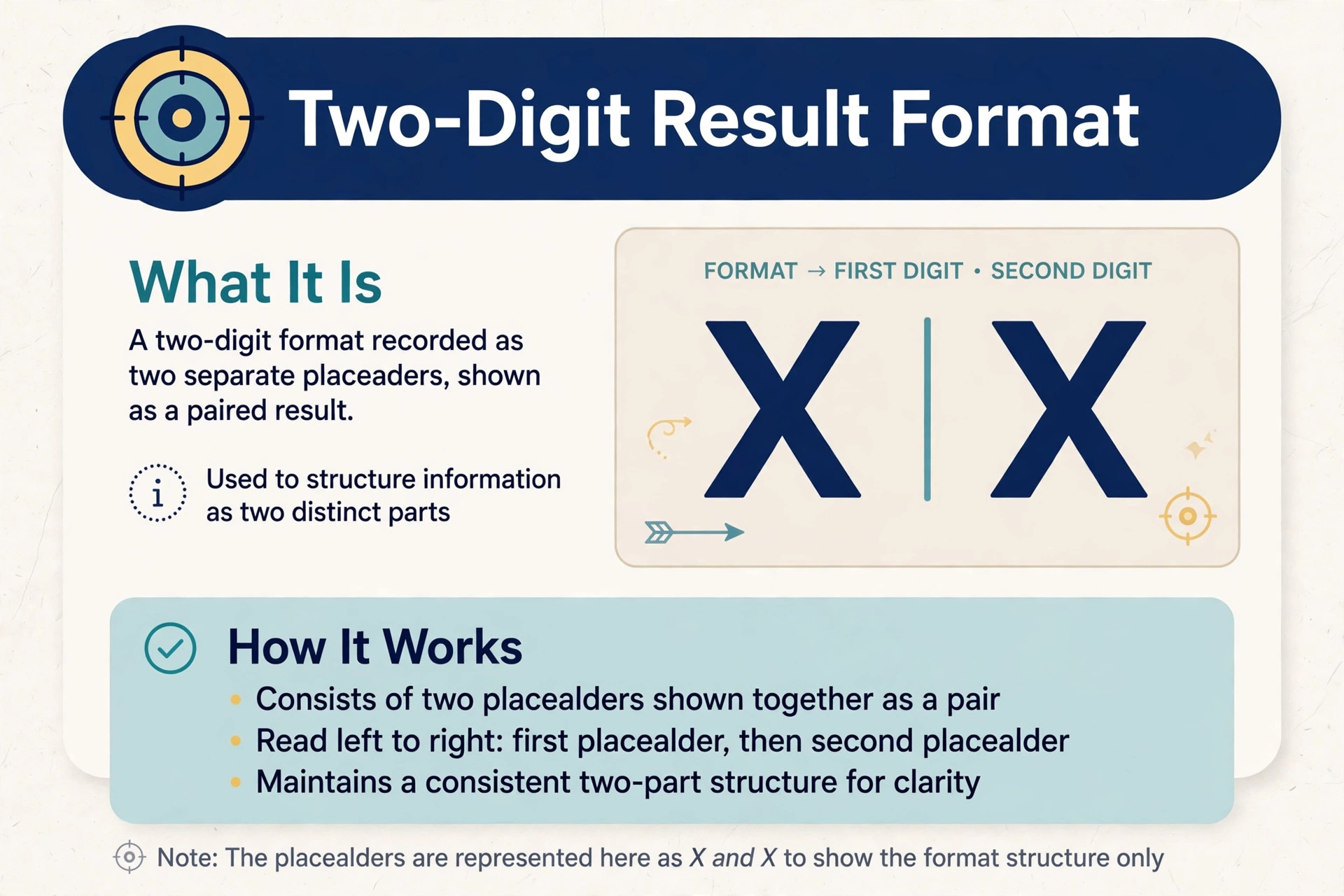
Every Khanapara morning result is a pair of two digit numbers: one for FR and one for SR. Each number runs from 00 to 99. Leading zeros are part of the number, so 07 is different from 70 and from 7. If your ticket says 07 and the declared result is 7 written without the zero, they are the same thing; counters always treat a single digit as a zero padded two digit number.
When a result page shows the morning outcome, it normally looks something like this:
FR: – (placeholder)
SR: – (placeholder)
The dashes above are placeholders, not real numbers. Real pages fill them with the declared digits once the rounds finish. The label matters: FR belongs to the first round of shooting, SR belongs to the second.
To check your ticket, compare your chosen number against the round you played. Many players buy for both rounds, some play only FR or only SR. Match your ticket’s round with the matching declared number. A match means a win for that round’s prize, which you claim at the counter where you bought the ticket, within the claim window the counter sets.
One more reading tip: result lists archive past days in rows, usually with the date, the FR number, and the SR number. When you open an archive, always confirm the date shown at the top of the row or the page. Yesterday’s FR number and today’s FR number can look identical in format, and mixing up the dates is an easy error when you are scanning quickly.
Where to Check the Khanapara Morning Teer Result Today
Most followers check the morning outcome in one of three places: at a local teer counter, on a result update website, or through word of mouth from someone at the ground. Counters post the numbers on boards as soon as they are declared, and staff can confirm your ticket on the spot. For everyone who is not near a counter, online result pages are the practical option.
When you check online, look for three quality signals. First, the page should clearly label which session and which round each number belongs to (Khanapara Morning, FR and SR). Second, it should show the date of the result so you know you are not reading an old number. Third, it should distinguish declared numbers from placeholders. A page that shows a dash or a blank for a round that has not finished yet is being honest; a page that fills in numbers before declaration time is not a source you should trust.
This site keeps a dedicated morning result flow: the homepage at Teer Results carries the day’s outcomes across sessions, and the teer result list page keeps the archive in one place so you can scroll back through previous days. Bookmark the list page if you check results daily; it saves you from hunting across different pages each morning.
Be cautious about where you get numbers. Never trust a result sent by an unknown person over messaging apps, and never pay anyone who claims they can give you the result in advance. Teer outcomes come from live archery and cannot be known beforehand. Anyone selling “confirmed” numbers before declaration is running a scam, no matter how convincing the message looks.
Khanapara Morning vs Other Morning Sessions
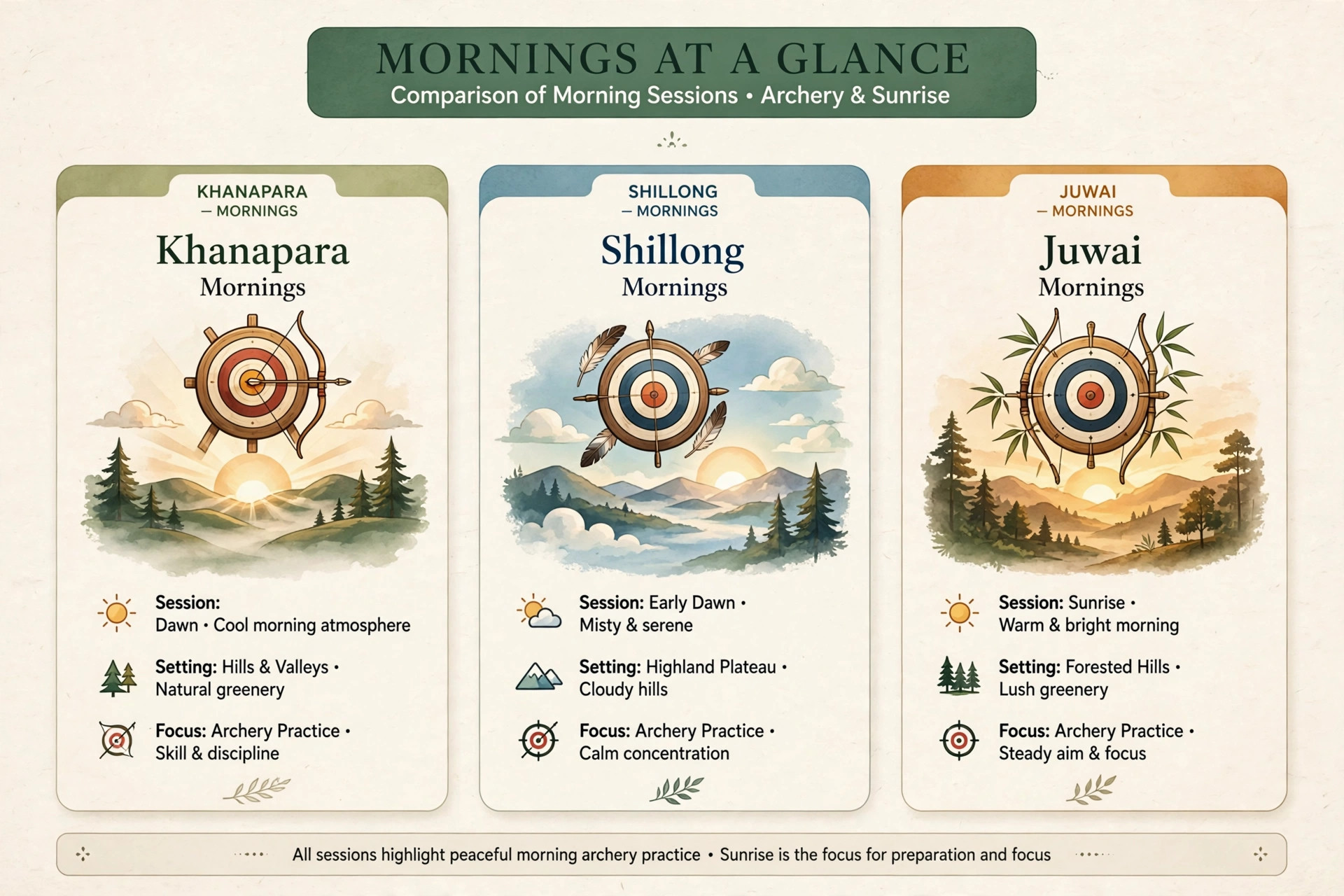
The Northeast teer calendar has several morning sessions, and newcomers often mix them up. Each one is a separate event with its own archers, its own counters, and its own result. A ticket bought for one session cannot win in another, so keeping them straight matters.
The three morning sessions you will hear about most are Shillong Morning, Juwai Morning, and Khanapara Morning. Shillong Morning is the morning edition of the famous Shillong teer, held in Meghalaya’s capital region. Juwai Morning is the morning edition of the Juwai (Jowai) teer. Khanapara Morning is the one this guide covers, held near Guwahati at the Assam Meghalaya border.
They share the same game mechanics (archery, two rounds, two digit results) but run on their own timetables and declare independently. On a normal day you will therefore see three separate morning FR numbers and three separate morning SR numbers, one pair per session. If you follow more than one, our Shillong morning teer result page covers the Shillong morning session, and you can compare its rhythm with Khanapara’s on the result list page.
Beyond the mornings, the same grounds run afternoon and evening sessions. Khanapara’s own day session is the natural next stop after the morning one; the Khanapara teer result page follows it. Night sessions in Shillong run later still. The full day is a ladder of sessions, and the morning result is simply the first rung.
Why the Morning Result Is Sometimes Delayed
Every follower has experienced it: the usual time passes and no number appears. Delays are a normal part of teer, and understanding the common causes keeps you from worrying or from trusting a fake early number.
The most common cause is weather. Archery cannot be shot safely or fairly in heavy rain or strong wind, so the clubs postpone the shooting until conditions improve. Ground conditions after rain can also slow things down. In these cases the result still comes, just later than usual.
Local holidays and festivals are the second common cause. Teer does not run on every day of the year; certain public holidays and local observances pause play. On those days there is no result at all, and any number circulating for that date is false.
Administrative or logistical holdups at the ground form the third category. Counting verification, disputes over a count, or late arrival of officials can push the declaration back. Organisers generally resolve these the same day.
What should you do when a result is late? First, do not trust any number posted before the official declaration, especially from messaging forwards. Second, check whether the day is a holiday. Third, wait and recheck a page that timestamps its updates, so you can see the moment the real number lands. Patience is the only strategy that works here; the number cannot be hurried.
Legality, Age Limits, and Responsible Play
Teer is a legal lottery in Meghalaya, played under the state’s regulatory framework for archery based lotteries. That legal status is exactly why it runs openly at grounds and licensed counters instead of underground. If you want the wider context on how lotteries are treated across Indian states, the Lotteries in India article on Wikipedia is a solid neutral starting point.
Legal does not mean unrestricted. Teer is strictly for adults aged 18 and above. Counters are not supposed to sell to minors, and parents should keep young people away from the counters and the betting side of the game entirely.
A few responsible play principles are worth stating plainly. Only play with money you can afford to lose, and treat any ticket as entertainment spending, not as income or investment. Set a fixed budget before you go to the counter and stop when it is spent. Never borrow money to play, and never chase losses by buying more tickets after a losing day. If playing stops being fun or starts affecting your finances, relationships, or work, step away and seek support; problem gambling help resources exist and using them is a sign of sense, not weakness.
It is also worth repeating the anti scam warning from earlier in this guide, because the morning session’s early timing makes it a favourite for fraud. Nobody can know the result before the arrows are shot and counted. “Advance result” sellers, “fixed number” agents, and anyone asking for payment over a messaging app for tomorrow’s number are scammers. The only real result is the one declared at the ground and posted by counters and reputable update pages after declaration.
Frequently Asked Questions
What is the khanapara morning teer result?
The khanapara morning teer result is the pair of winning numbers (FR and SR) declared for the morning archery session held at Khanapara near Guwahati. Each number is two digits from 00 to 99, derived from the count of arrows hitting the target in each round. It is separate from the Khanapara day (afternoon) session result.
At what time is the Khanapara morning teer result declared?
On a normal playing day the morning session runs in the late morning, with the first round declared first and the second round following after a short interval, so the full result is usually available between late morning and early afternoon local time. Exact minutes can shift with weather, holidays, or ground conditions, so check a page that timestamps its updates rather than relying on a fixed minute.
How many rounds are there in the Khanapara morning session?
There are two rounds: FR (first round) and SR (second round). Archers shoot in each round, officials count the arrows that hit the target, and the last two digits of each count become that round’s result. Both numbers together make up the complete morning result.
How do I check whether I won the Khanapara morning teer?
Compare the two digit number on your ticket with the declared number for the round you played. If they match, you win that round’s prize. Claim it at the counter where you bought the ticket within the counter’s claim window, and keep your ticket safe until the prize is paid.
Is the Khanapara morning teer result the same as the Shillong morning teer result?
No. They are separate sessions with separate archers, counters, and results. Khanapara Morning is held near Guwahati at the Assam Meghalaya border, while Shillong Morning is the morning edition of the Shillong teer. A ticket for one cannot win in the other, so always check the result for the session printed on your ticket.
Why is today’s Khanapara morning teer result not showing yet?
The most common reasons are a weather delay at the ground, a local holiday with no play scheduled, or a logistical holdup in shooting or counting. Wait and recheck a timestamped result page. Do not trust numbers forwarded on messaging apps before the official declaration, because the real result cannot be known in advance.
Can I buy Khanapara morning teer tickets online?
Official tickets are sold at licensed physical teer counters before the first round begins. Be very cautious of websites, apps, or individuals claiming to sell official teer tickets online; many are scams. If you cannot reach a counter, the safe choice is to follow the result without playing rather than risk money with an unverified seller.
Conclusion
The khanapara morning teer result opens the day’s teer calendar: two rounds of archery, two two-digit numbers, usually declared between late morning and early afternoon. Now you know how the FR and SR rounds work, how to read the numbers without mixing up rounds or dates, where to check them reliably, and how this session differs from the Shillong and Juwai morning games. Keep the responsible play principles in mind, ignore anyone selling advance numbers, and use the result list page to track the sessions you follow. Check back each morning, and may your reading of the game stay sharp.