
If you have landed here because you searched teer result yesterday, welcome. You are probably holding a small piece of paper, a ticket bought at a counter, and you want to know whether it means anything. Or maybe a friend mentioned the result, a family member asked you to check, or simple curiosity brought you here. Either way, you are in the right place, and you do not need to know anything about this game yet. This article starts from zero and explains everything in plain, friendly language: what a teer result is, what the letters FR and SR stand for, why there is a separate result for yesterday, and how to find and read it without confusion.
By the end of this guide you will be able to look at any yesterday teer result listing and understand exactly what you are seeing. Let us take it slowly, one idea at a time.
Teer Result Yesterday – The Gentle Introduction
Let us begin with the sentence you came for. A teer result yesterday is simply the declared outcome of the teer games that were played the previous day. Just like a sports score from last night’s match or the headline of yesterday’s newspaper, it is a record of something that already happened. People look it up to check tickets they bought the day before, to keep their own notes, or just to stay familiar with the game.
The word “teer” itself comes from a Hindi word meaning arrow. Teer is a traditional game from the state of Meghalaya in northeastern India, and it is one of the most unusual lotteries in the world. Instead of a machine picking random numbers, real people shoot arrows at a target. The number of arrows that hit the target is counted, and the last two digits of that count become the winning number. We will explain that counting in detail shortly, but for now just remember this picture: archers, a target, a counted score, and a two digit result. That is the heart of everything on this page.
There are a few markets where teer is played, and each one publishes its own result. The three names you will see most often are Shillong, Juwai and Khanapara. Shillong is the capital of Meghalaya and the oldest and best known of the three. Juwai is another town in Meghalaya with its own game, and Khanapara is a locality on the border with Assam that runs its own draws too. When you search for teer result yesterday, you might be looking for any one of these, or all of them. This article covers each one so that you can find exactly what you need.
A beginner-friendly truth is worth stating early. Nothing about reading a yesterday teer result requires special knowledge. The listings look cryptic at first glance because of the shorthand, but once someone explains FR, SR, and the date format, it all clicks into place. This guide is that explanation.
What a Teer Result Actually Is
Let us slow down and build the foundation. A result is not a prediction. It is not a guess about the future. A teer result is the official, declared outcome of a round of archery that already took place. When the shooting is over and the arrows are counted, officials announce a number, and that number is the result. After that moment, the result is fixed history. Nobody can change it, and nobody needs to debate it.
The game runs on a simple cycle every working day. Ticket counters open in the morning. Players walk up and buy a ticket for a number between 00 and 99. They choose a round, either the First Round or the Second Round. Then the archers shoot. In the First Round, a set number of archers shoot a set number of arrows each at a target within a time limit. Officials count how many arrows hit. If, for example, the count ends in the digits of some number between 00 and 99, those last two digits are the result. The same process repeats for the Second Round later in the day, with its own shooting, its own count, and its own result.
Note that we never print real winning numbers in this article. Whenever you see a number shown as an illustration here, it will be marked clearly as an example only, never a real result. For real results, always check a live listing such as the one on the Teer Results homepage. The reason is simple: a result is a fact about a specific day, and an evergreen guide like this one should never pretend to know it.
The result of each round is a number between 00 and 99, always shown as two digits. If the last two digits of the arrow count are 7, the result is written as 07, not 7. If the count ends in 00, the result is 00. That two digit format is a small detail that confuses newcomers, so remember it: always two digits, with a leading zero when needed.
Teer is organised as a legal lottery by the state of Meghalaya. The game is run by licensed associations under state supervision, which is why it can operate openly with counters, printed tickets and published results. Because it is a real form of gambling, it is strictly for adults. Players must be 18 years or older, and the sensible approach is to treat a ticket as small entertainment spending, never as a way to earn money. We return to this point near the end of the article.
For context about the region where this tradition lives, you can read more on the official state portal, and the broader story of archery as a sport is well told on Wikipedia’s archery page. These are background reading only; everything you need about results is right here.

FR and SR – The Two Rounds in Plain Words
Almost every first-time reader gets stuck on the same two letters: FR and SR. Let us clear them up completely, because once you understand these, most result pages become readable.
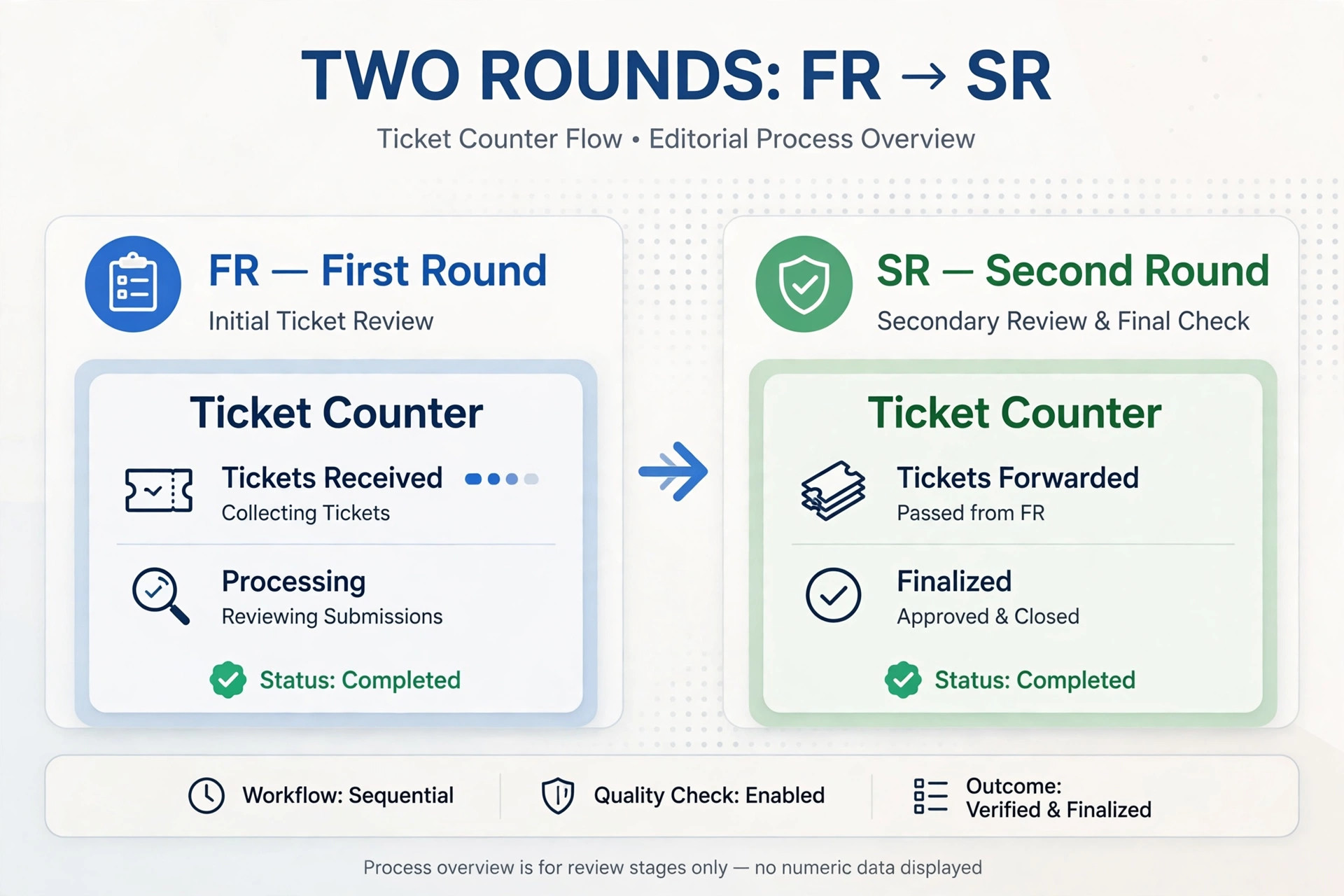
FR stands for First Round. It is the earlier of the two daily shooting sessions. Ticket sales for the FR close before the shooting begins, the archers shoot, the arrows are counted, and the FR result is declared. SR stands for Second Round. It is the later session, run after the FR is complete, with fresh ticket sales, fresh shooting, and a fresh count. The SR result is declared after that.
The two rounds are independent games. That is the key idea. Buying a ticket for the FR gives you a stake in the FR result only. It has nothing to do with the SR result. Buying a ticket for the SR gives you a stake in the SR result only. The two numbers you see on a result page, one labelled FR and one labelled SR, are the outcomes of two separate contests held hours apart. They can be the same number or completely different numbers. One tells you nothing about the other.
Here is how a typical day flows in each market. Counters open in the morning and sell tickets for the First Round. The FR shooting takes place around the middle of the day, and the FR result is declared in the early afternoon. Then counters sell tickets for the Second Round. The SR shooting takes place later in the afternoon, and the SR result is declared in the early evening. Exact clock times differ slightly between markets and sessions, and the timing page on this site keeps the current schedule. The pattern is always the same though: morning sales, afternoon shooting, FR declaration, second sales, second shooting, SR declaration.
Because there are two rounds, a “full result” for a day is always a pair: the FR number and the SR number. When someone says “check the teer result yesterday,” they usually mean both numbers, for every market they care about. A single round is only half the story.
Why two rounds exist
Newcomers often wonder why the game does not just shoot once. The answer is partly tradition and partly practical. Two rounds mean two separate games, which doubles the entertainment and gives players a second chance to take part later in the day. It also gives the organisers two ticket sale windows, which supports the archers, the counter operators and the clubs that run the grounds. For the reader, the important part is not the economics. It is simply to know that every day produces two results per market, and both matter.
A small vocabulary check
Before moving on, let us lock in the terms you have learned. A “round” is one shooting session. The “result” is the declared two digit number for that round. FR means the First Round and its result. SR means the Second Round and its result. A “market” is one of the towns or localities running the game, such as Shillong, Juwai or Khanapara. A “session” sometimes refers to the morning or evening series of games in markets that run more than one set of draws per day. And “yesterday’s result” means the FR and SR numbers declared the previous day, for the market you are interested in.
The Three Markets You Will Meet – Shillong, Juwai and Khanapara
When you search for teer result yesterday, the search results show several names, and this is where many beginners feel lost. The three big markets are Shillong, Juwai and Khanapara. Each is a separate game with separate archers, separate ticket counters and separate results. Knowing which market your ticket belongs to is essential, because a number that wins in one market means nothing in another.
Shillong – the original
Shillong teer is the oldest and most famous of the games. It is played in Shillong, the capital city of Meghalaya, and organised by the local archery associations there. When people say “teer” without naming a place, they usually mean Shillong. The Shillong game runs the classic two round structure: an FR in the afternoon and an SR later the same day. Its results are the most widely published, and its history stretches back decades. If your ticket was bought in or around Shillong, the Shillong teer result yesterday is the one to check on the Shillong teer result page.
Juwai – the second town
Juwai, also spelled Jowai in some listings, is a town in the Jaintia Hills region of Meghalaya. Its teer game follows the same archery format as Shillong but is run by its own organisers, with its own schedule and its own results. The Juwai draws include day sessions and, in some series, morning sessions, so a full Juwai result for yesterday may include more than one pair of FR and SR numbers depending on the session. If your ticket says Juwai, look for juwai teer result yesterday specifically, on the Juwai teer result page.
Khanapara – the border market
Khanapara is a locality on the Assam-Meghalaya border, and its teer game is popular with players in and around Guwahati. Like the others it runs FR and SR rounds with the same rules, but it is a separate draw with separate numbers. Khanapara also runs morning sessions in some series, so again, check which session your ticket belongs to. The Khanapara teer result page keeps its listings separate from Shillong and Juwai for exactly this reason.
Morning, day and night sessions
Some markets run more than one series of games per day. You may see labels like “morning teer” or “night teer” alongside the market name. These are extra sessions, each with its own FR and SR pair. The night teer, for example, is an evening series popular with players who missed the day draws. When you look up yesterday teer result listings, you may see several blocks: Shillong day, Juwai day, Khanapara day, plus morning or night blocks. Each block is independent. Match your ticket to the right block by reading the market name and the session label on the ticket itself.

What “Yesterday’s Result” Really Refers To
Now we can answer the question in the search box precisely. When you type teer result yesterday into a search engine, you are asking for the FR and SR numbers that were declared on the previous calendar day. But because there are three markets, and sometimes several sessions, “yesterday’s result” is not one number. It is a small collection of numbers, and knowing the collection saves you from looking at the wrong one.
For a single market on a single day, yesterday’s result is two numbers: yesterday’s FR and yesterday’s SR. For Shillong, that pair is the shillong teer result yesterday. For Juwai, the pair is the juwai teer result yesterday. For Khanapara, the pair is the khanapara teer result yesterday. If the market ran a morning or night session yesterday, each of those sessions adds its own FR and SR pair to the collection.
Dates matter more than beginners expect. Result pages organise listings by date, and the date shown is the date the shooting happened, not the date the ticket was bought. If you bought a ticket yesterday morning for yesterday’s FR, the result you need is listed under yesterday’s date. If you bought a ticket late in the evening for the next day’s morning session, the result belongs to a different date block. When in doubt, read the date printed on the ticket and match it to the date on the result listing.
Yesterday versus today versus previous
Result sites usually show three kinds of listings. “Today” shows the numbers declared so far on the current day, with upcoming rounds marked as pending. “Yesterday” shows the complete set of numbers from the previous day. “Previous results” or the result list page shows a longer history, often the last week or month, so you can scroll back further. If you missed checking for a few days, the full list page is the place to go. The teer result list on this site keeps the archive in one place.
Holidays and off days
Teer is not played every single day. The game pauses on Sundays in most markets and on certain public holidays. On those days there is no shooting, no counting and no result. This is a common source of confusion: a beginner searches for teer result yesterday, finds nothing under yesterday’s date, and assumes the site is broken. Usually the explanation is simply that yesterday was an off day. Result pages typically leave the date blank or mark it clearly. If you see a gap in the listing, check whether the date was a Sunday or a holiday before worrying.
Time zones and late declarations
Results are declared in Indian Standard Time, and the declaration moment is when the counting is verified by officials. Occasionally a declaration runs a little late. If you check very early in the morning, yesterday’s listing is always complete, because the previous day’s shooting finished the evening before. Yesterday’s results are the most stable listings on any result site. Unlike today’s numbers, which update through the day, yesterday’s are finished history.
Teer Result Yesterday – How to Find It Step by Step
You now understand what you are looking for. Here is the practical part: how to actually find the teer result yesterday for your market, step by step, with nothing assumed.
Step 1 – Identify your market and session. Look at your ticket or your memory of where the ticket was bought. Was it Shillong, Juwai or Khanapara? Was it a morning, day or night session? Write it down or keep it in mind. This is the step most beginners skip, and it is the step that prevents almost all confusion later.
Step 2 – Go to a result listing you trust. Open the Teer Results homepage or the dedicated market page for your game: the Shillong teer result page, the Juwai teer result page, or the Khanapara teer result page. These pages are organised by market, so you will not mix up one town’s numbers with another’s.
Step 3 – Find the date you need. Result pages show dates clearly, usually with the most recent day at the top. Scroll or look for yesterday’s date. Remember that the date refers to the day the shooting took place. If yesterday was a Sunday or a holiday, expect that date to be blank or marked as an off day.
Step 4 – Read the FR and SR entries for that date. In the row or card for yesterday’s date, find the two numbers labelled FR and SR. Both are two digit numbers between 00 and 99. If your market ran a morning or night session yesterday, make sure you are reading the block that matches your ticket’s session label.
Step 5 – Compare with your ticket. Your ticket shows the number you chose and the round you chose, FR or SR. Compare your number with the declared number for that same round. If they match exactly, the ticket is a winning ticket for that round. A match in the FR does not make an SR ticket win, and the other way round. Each round stands alone.
Step 6 – Keep a small record. Many regular players keep a notebook or a phone note with the date, the market, the session, FR, SR and their own ticket numbers. This takes seconds and removes all doubt later. When someone asks you about yesterday teer result a week from now, your note will answer instantly.
A word of caution while searching: the internet has many result sites, and not all of them are careful. Some publish numbers late, some mix up markets, and a few publish invented numbers to attract visitors. Stick to listings that are consistent, that clearly label market, session and date, and that never ask you for money or personal details to view a result. A result is public information. It should never sit behind a payment or a signup.

How to Read Yesterday’s Teer Result Like a Regular
Once you have the listing open, reading it is easy if you know the layout. Most result pages use the same building blocks, so let us walk through them.
The date header comes first. It tells you which day’s shooting the numbers belong to. Dates are usually written in day-month-year order. Make sure the header says yesterday’s date before you read anything else. This single check prevents the most common beginner mistake, which is reading today’s partial numbers and thinking they are yesterday’s complete ones.
Next come the market blocks. Each market gets its own section, clearly labelled: Shillong, Juwai, Khanapara, and sometimes the session names like Morning or Night. Inside each block you will see the round labels. FR marks the First Round result. SR marks the Second Round result. The numbers sit next to these labels as two digit figures.
Some listings add a status note. Words like “declared” mean the shooting is done and the number is official. Words like “pending” or a dash placeholder mean the round has not happened yet or the number has not been announced. For yesterday’s date you should see “declared” or a plain number everywhere, because yesterday’s shooting is finished. If you see “pending” under yesterday’s date, something is off: either the declaration is unusually delayed or you are looking at the wrong date.
A clean listing shows nothing else. There are no predictions, no “hot numbers,” no tips hidden in a result table. Be suspicious of any page that mixes result numbers with suggested numbers for future games. A result page reports the past. Anything that claims to know the future is not a result page; it is a prediction page, and predictions in teer are guesses, never facts.
The two digit habit
One more reading skill worth practising: always read results as two digits. The number 07 (a format example only, never a real result) is not the number 7 in this game; it is “zero seven,” a distinct outcome from 70 and from 7 written without its zero. Tickets are printed with two digits, and results are declared with two digits. When you compare your ticket to the listing, compare both digits. This sounds fussy, but it is the kind of detail that separates a confident reader from a confused one.
Why People Look Up Yesterday Teer Results
It is worth pausing to ask why yesterday’s result gets so many searches. Understanding the reasons helps you use the listings well and avoid the traps.
The most common reason is the simplest: checking a ticket. Someone bought a ticket yesterday, did not check the result in the evening, and wants to know this morning whether it won. Yesterday’s listing is the official record they need. This is the use you are probably here for, and it is the most legitimate one.
The second reason is record keeping. Regular players and small shopkeepers keep their own histories of results. They note each day’s FR and SR numbers in a notebook, partly for interest and partly to settle friendly debates about what happened on a given date. Yesterday’s result is simply the latest entry in that running log.
The third reason is curiosity and habit. Teer is woven into daily life in Meghalaya. Checking the result is a small ritual, like reading the weather or the headlines. Many people look up yesterday’s numbers even when they did not play, just to stay in the loop of a conversation happening around them.
The fourth reason is verification. If someone tells you a number won yesterday, the listing lets you confirm or correct the claim. In a game built on trust, the public, published result is the referee everyone can consult.
Notice what is not on this list: using yesterday’s numbers to predict tomorrow’s. It is tempting, and many websites encourage it, but it rests on a misunderstanding. Each day’s shooting is a fresh physical event. The archers shoot again, the arrows are counted again, and the outcome is independent of what happened yesterday. Yesterday’s result tells you what happened yesterday. It contains no information about tomorrow. Any site that sells “analysis” of past results as a path to future wins is selling hope, not knowledge. This article will not do that, and you should be wary of pages that do.
Common Confusions for First-Time Readers
Beginners stumble in predictable places. Here are the mix-ups we see most often, so you can sidestep every one of them.
Confusion one: today versus yesterday. Because result pages show both, it is easy to read today’s FR, which may already be declared, and mistake it for yesterday’s full result. Always check the date header first. If the page shows a “pending” or dash placeholder anywhere in the block you are reading, you are probably looking at today, not yesterday.
Confusion two: mixing markets. A player who bought a Khanapara ticket checks the Shillong numbers, sees no match, and feels disappointed for no reason. The markets are separate games. Your ticket’s market must match the listing’s market. When in doubt, read the ticket again.
Confusion three: mixing sessions. In markets with morning, day and night sessions, each session has its own FR and SR. A morning ticket must be checked against the morning block, not the day block. The session name on the ticket is your guide.
Confusion four: FR versus SR. A player buys an FR ticket, the SR number matches their chosen number, and they celebrate a win that never happened. The rounds are independent. Match your number to your round only.
Confusion five: the missing Sunday. New readers search for teer result yesterday on a Monday morning and find nothing for Sunday. There is nothing to find. Sunday is an off day in most markets, and the listing is correctly empty. The same applies to declared holidays.
Confusion six: spelling variations. Juwai is sometimes written Jowai. Khanapara is sometimes written Khanapara Teer or just Khanapara. Shillong is sometimes abbreviated. These are the same games under slightly different spellings, but always confirm the market page you are on matches your ticket.
Confusion seven: unofficial numbers. Occasionally a number circulates on social media before the official declaration, or a site publishes an early “leaked” figure. Treat these as rumours. The result is only the result when the officials declare it and the reputable listings show it. If a number you saw in a chat group differs from the listing, trust the listing.
Yesterday Teer Result and the Bigger Picture
By now you have the full beginner’s toolkit: what a teer result is, how FR and SR work, which markets exist, what “yesterday” means on a result page, how to find it, how to read it, and which confusions to avoid. Let us zoom out for a moment and place this small daily ritual in its larger setting, because understanding the context makes the numbers more meaningful.
Teer is not just a lottery. It is a living tradition. The archery at its centre comes from the Khasi people’s long relationship with the bow, and the daily game supports archers, clubs, counter operators and the communities around the teer grounds. When you look at yesterday’s result, you are looking at the outcome of real people doing something skilful in public, not a computer’s output. That human element is why the game has survived and grown for decades, and why result checking feels more like following a sport than reading a lottery draw.
The game’s legal status matters too. Teer operates under Meghalaya state law as a licensed lottery, which is why counters operate openly and results are published without secrecy. This legality comes with boundaries: only adults may play, the game runs only in its licensed areas, and the organisers answer to state oversight. If you ever encounter someone running a “teer” game outside this framework, asking for online payments to unknown accounts, that is not the legal game described here. Stay with licensed counters and public listings.
A final note on responsibility, and it is an important one. Teer is gambling, even when the stakes are small. Set a strict personal limit before you ever buy a ticket, never chase losses, and never borrow money to play. If checking yesterday’s result stops feeling like a small daily curiosity and starts feeling like a compulsion, step back and talk to someone you trust. The game will still be there tomorrow. Your wellbeing matters more than any ticket.
Frequently Asked Questions
What does teer result yesterday mean?
It means the declared FR and SR numbers from the teer games played the previous day. For each market you follow, yesterday’s result is the pair of two digit numbers announced after yesterday’s First Round and Second Round shooting. Because there are several markets and sometimes several sessions, “yesterday’s result” is a small collection of numbers rather than a single figure.
What do FR and SR stand for in teer results?
FR stands for First Round and SR stands for Second Round. They are the two daily shooting sessions in each teer market. Each round has its own ticket sales, its own archery, its own arrow count and its own declared result. The two rounds are independent: a ticket bought for the FR only relates to the FR result.
How do I check the shillong teer result yesterday?
First confirm your ticket is for Shillong and note the session. Then open the Shillong teer result page, find yesterday’s date in the listing, and read the FR and SR numbers shown for that date. Compare your ticket’s number with the declared number for the same round. Both digits must match.
Where can I find juwai teer result yesterday and khanapara teer result yesterday?
On the Juwai teer result page and the Khanapara teer result page respectively. Each market has its own listing because each is a separate game. Make sure you are on the right market’s page and reading the right session block, since these markets can run morning or night sessions in addition to the day draws.
Why is there no teer result for yesterday on some days?
The most common reason is that yesterday was an off day. Teer is not played on Sundays in most markets, and it pauses on certain public holidays. On those days there is no shooting and therefore no result, so the listing for that date is correctly empty. Check whether the date was a Sunday or holiday before assuming an error.
Can yesterday’s teer result help me predict today’s numbers?
No. Each day’s shooting is a fresh, independent physical event. The archers shoot again, the arrows are counted again, and the outcome does not depend on what happened the day before. Yesterday’s result is a record of the past, not a clue about the future. Treat any site promising predictions based on past results with scepticism.
Is teer legal, and who can play?
Teer is a legal lottery in the state of Meghalaya, run by licensed associations under state supervision. It is strictly for adults aged 18 and above. Play responsibly: set a spending limit, treat tickets as entertainment, never chase losses, and never borrow money to play.
A Warm Goodbye and a Simple Summary
You arrived searching for teer result yesterday knowing nothing, and you now know a great deal. A teer result is the declared outcome of a real archery round. FR and SR are the two independent daily rounds. Shillong, Juwai and Khanapara are separate markets with separate numbers. “Yesterday’s result” is the set of FR and SR numbers declared the previous day, organised by date, market and session. You know how to find it step by step, how to read a listing, and which beginner mistakes to avoid.
Keep this page bookmarked as your reference. Whenever a friend asks what FR means, or a ticket needs checking, or yesterday’s date shows a blank because it was a Sunday, you will know exactly what is going on. Welcome to the small, daily world of teer results. You are no longer a beginner.