
If you want to look up a khanapara teer previous result, an archive page is the right place to start. A previous result archive keeps every declared Khanapara teer result in date order, so you can scroll back to any day and see the first round and second round numbers exactly as they were announced. This guide explains how these archives work, how to read a khanapara teer result list correctly, what a khanapara teer chart shows, and how to use old records responsibly without falling into prediction myths.

What Is a Khanapara Teer Previous Result Archive
A khanapara teer previous result archive is a record of all the results that have already been declared for the Khanapara teer game. Khanapara is the edition of the teer game played at Khanapara, near Guwahati, and like the other teer games it runs in two rounds each day: the first round (FR) and the second round (SR). Once each round is officially declared, the winning number is stored in the archive under its date. Over time this builds a complete history that anyone can browse.
The archive exists so that nobody has to guess or rely on memory. If you missed the live declaration in the afternoon, the khanapara teer previous result archive lets you check the number later with confidence. Because the archive is kept in chronological order, you can also compare today with yesterday, or look back at a specific date from weeks ago, and know that the number you see matches what was declared at the time.
It is important to understand what an archive is not. It is a history book, not a prediction tool. No past result influences the next draw, and no pattern in the archive can tell you what will happen next. The archive is there for verification, record keeping, and reference. Anyone who tells you that studying old results can produce winning numbers is misleading you, and this guide will explain why that claim is false.
Why the Archive Matters
There are several honest reasons to use a khanapara teer previous result archive. The most common is simple verification. If someone tells you what yesterday’s number was, or if you wrote down a result in a hurry and want to confirm it, the archive gives you the official record for that date. Having one trusted place for this removes confusion.
Another reason is personal record keeping. Some people like to keep a diary of the days they participated in the game. The archive makes it easy to fill in any gaps, because every declared round is listed with its date. This is especially useful if you participate regularly and want your records to stay accurate.
The archive also protects against fake results. False numbers spread quickly on messaging apps, and a wrong number can cost someone money or peace of mind. When a dispute comes up about what a previous khanapara result actually was, the archive settles it. That is why a reliable, well-maintained archive page is such a valuable resource for the teer community.
How the FR and SR Rounds Work
The Khanapara teer game is played in two rounds per day. In each round, archers shoot arrows at a target, and the number of arrows that hit the target is counted. The last two digits of that count become the result number for the round. So the first round produces one two-digit number and the second round produces another two-digit number.
The two rounds are declared at different times during the day, with the first round announced in the afternoon and the second round following later. The exact declaration time can vary slightly from day to day, because the organisers wait until the shooting and counting are properly finished. On game days that fall on weekdays you will generally see both rounds declared by the evening. On Sundays and certain public holidays the game may not be held, and the archive will show no result for those dates.
In the archive, the two rounds are always kept in separate columns or clearly labelled sections. This separation matters because the first round number and the second round number come from completely separate shooting sessions. They should never be mixed up when you are reading or recording a previous result.
How to Read the Khanapara Teer Result List
The khanapara teer result list is the day-by-day table where previous results live. Learning to read it properly takes only a few minutes, but it saves you from the common mistakes that confuse beginners. Most result lists follow the same layout: one row per date, with the date on the left and the first round and second round numbers in the following columns.
Start by finding the date you want. Dates are usually written in day-month-year order. Once you have located your date, look across that row. The first number column shows the FR result for that date, and the second number column shows the SR result for that date. Some lists add the day of the week next to the date, which helps when you are checking a result from a week or two ago.
Always read the column headings before reading the numbers. Different websites arrange their tables differently, and a small number of sites may put the second round first or use their own labels. The headings tell you exactly which column is which, so you never have to guess. If a row has a dash instead of a number, that means the result for that round was not declared on that date, usually because the game was not held that day.
Understanding the List Layout
A typical khanapara teer result list entry contains four pieces of information: the date, the day name, the FR result, and the SR result. The date and day name identify when the result was declared. The FR and SR results are two-digit numbers between 00 and 99. Some archives also note whether the day was a game day or a holiday, which explains why certain rows are empty.
Lists are ordered with the most recent date at the top on most sites, so you can see yesterday’s result immediately.

If you are checking a result from many months ago, many lists offer month or year navigation. Use these controls rather than scrolling endlessly. Good archives let you jump directly to the month you need, which keeps the page fast and easy to use.
What the Dash Placeholder Means
You will sometimes see a dash, written as “-“, in place of a number in the archive. This is just a placeholder. It means that no result was declared for that round on that date. The most common reason is that the game was not held that day, such as on a Sunday or a public holiday. It can also appear for a round whose declaration is still pending, in which case the number will be filled in once the official announcement is made.
A dash is never a result of zero. If the actual declared number is 00, it will be written as 00, not as a dash. Do not mistake one for the other. When you see a dash, the correct interpretation is simply that there is no declared result for that slot, and you should check back later or move on to the next date.
An Example of the Format
To make the layout concrete, here is an example of how one row of a khanapara teer result list might look. Please note that the numbers below are an illustration of the format only and are not real results:
Example only, not a real result: Date: 12-09-2026 | Day: Saturday | FR: – | SR: –
This shows a Saturday where neither round had a declared result at the time of viewing. A normal game day would show two two-digit numbers in the FR and SR positions instead of dashes. When you read a real archive, the layout will look like this example, but the numbers will be the actual declared results for each date.
How to Check Khanapara Teer Previous Result Records
Checking a khanapara teer previous result is straightforward once you know where the archive lives and how the dates work. The fastest method is to open the archive page, find the date you need, and read the FR and SR columns. Most people can do this in under a minute once they are familiar with the layout.
For the most recent results, you may not need to scroll at all. Recent dates sit at the top of most lists, so yesterday’s and the day before’s results are usually visible as soon as the page loads. For results from a week or more ago, scroll down or use the month navigation. For results from several months ago, use the year and month selectors if the archive provides them.
Make it a habit to double check the date before you read the numbers. It is easy to read the row above or below the one you want, especially on a small phone screen. Read the date, confirm it matches the day you intended, and only then look at the FR and SR columns. This small habit prevents almost all reading mistakes.
Checking Results from Today, Yesterday and Last Week
The distinction between these three time windows is worth understanding. Today’s result may still be pending if the rounds have not been declared yet, so the archive row for today might show dashes until the official numbers arrive. Yesterday’s result is the most commonly checked previous result, and it will always be fully declared on a game day. Last week’s results are useful when you want to fill in a week of personal records at once.
If today is a game day and you are checking early in the day, do not be surprised to find today’s row empty. The archive is a record of declared results, and a result cannot appear before it is announced. Wait until the declaration time passes, then refresh the page and check again.
Using Week and Month Views
Many archives offer more than a simple list. A week view groups seven days together, which is handy for weekly tracking. A month view shows the whole month in a calendar-style grid, letting you spot at a glance which days had results and which did not. Holidays and non-game days stand out clearly in this view because their cells are empty.
The month view is also the fastest way to check a result from several months back. Instead of scrolling through a long list, you pick the month and scan the grid for your date. If your archive does not offer these views, the standard list still works fine; it just takes a little more scrolling.
Using Search and Filter Controls
Some archive pages include a search box or a date picker. If you know the exact date you want, these controls take you straight to it. Enter the date in the format the site expects, usually day-month-year, and the page will highlight or jump to that row. This is much faster than scrolling when you need a result from long ago.
A few archives also let you filter by round, showing only FR results or only SR results across all dates. This can be useful if you only follow one of the two rounds. As always, remember that the archive is for reference only, and filtering tools do not change what the numbers mean.
Khanapara Teer Chart vs Simple List
When people talk about a khanapara teer chart, they usually mean a compact grid that displays many results together, often organised by month or week. A simple list, by contrast, shows one row per date in a long table. Both formats contain the same information. The difference is in how easy they are to scan.
A chart view packs more days into less screen space, which makes it easier to compare results across a whole month. This can be helpful for record keeping, because you can see an entire month of results without scrolling. A simple list, on the other hand, is easier to read on small screens and less likely to cause confusion, because each date gets its own clearly labelled row.
Neither format is more accurate than the other. Accuracy depends on the source, not the layout. Choose the format you find easiest to read, and always read the column or cell headings carefully before taking down a number.
What a Chart View Shows
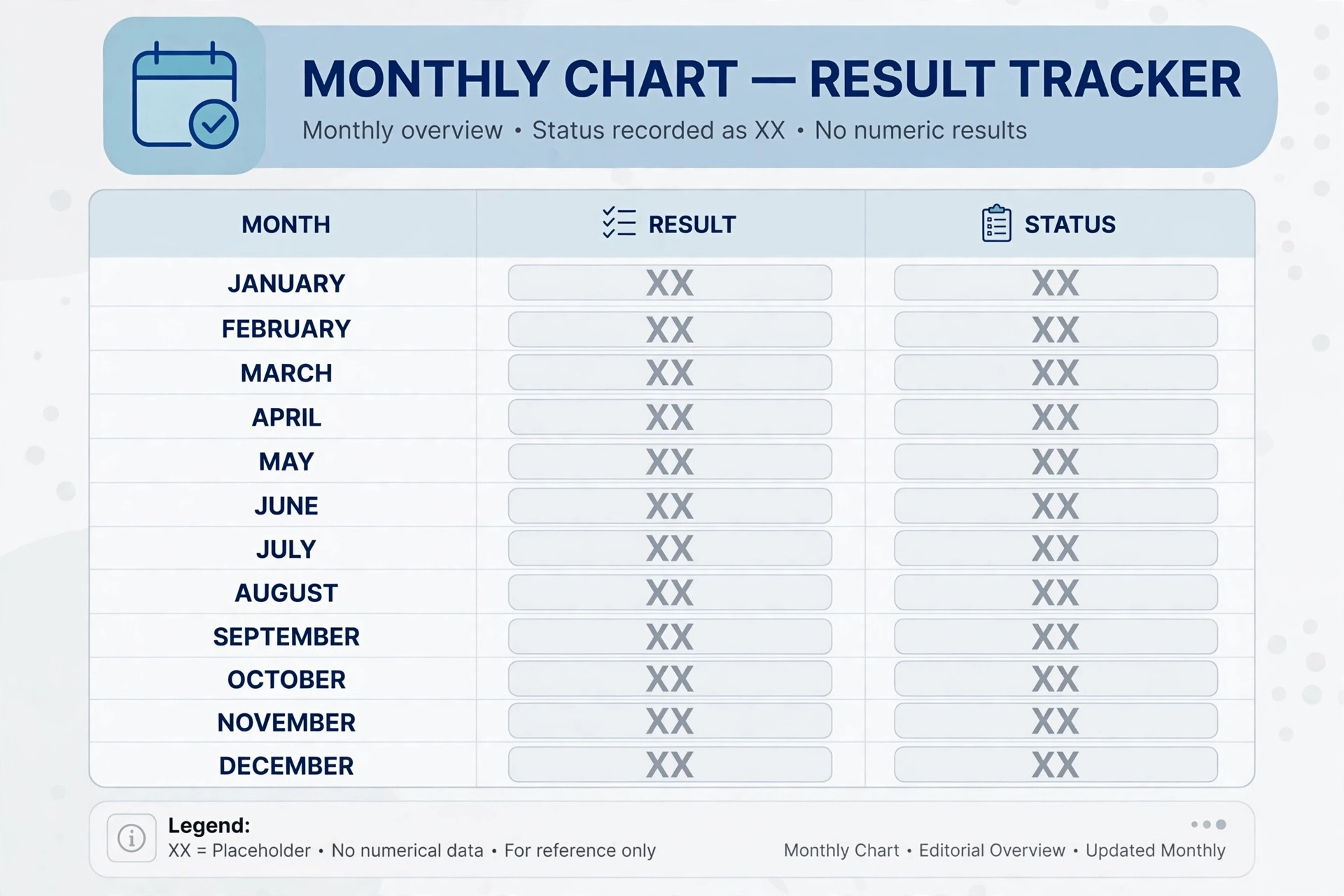
A khanapara teer chart typically shows a grid where each cell represents one date. Inside each cell you find the FR and SR numbers for that date, often stacked with small labels so you can tell which is which. Empty cells or dashes mark days when the game was not held. Many charts also include a heading row with the days of the week, just like a calendar.
Because charts compress a lot of information into a small space, they reward careful reading. Zoom in on your phone if the cells look small, and tap or hover on a cell if the site shows extra detail that way. Take your time with the first few cells until you are sure you are reading the FR and SR numbers correctly.
Which Format Suits You
If you check results daily, the simple list is usually enough. It is clear, it loads fast, and the latest dates are right at the top. If you do weekly or monthly record keeping, the chart view can save you time because it shows more dates at once. Many people use both: the list for daily checks and the chart for reviewing a whole month.
The best approach is to pick one trusted archive and stick with it. Jumping between many different sites with different layouts increases the chance of misreading a result. Find a format you understand, learn it once, and return to it whenever you need a khanapara teer previous result.
Khanapara Morning Teer Previous Results
The Khanapara morning session is a separate game from the day session, and its results are archived separately. If you are looking for a khanapara teer previous result from the morning draw, make sure you are on the morning archive and not the day session list. Mixing the two is one of the most common mistakes people make.
Like the day session, the morning session has its own first round and second round, declared in the morning hours. The archive layout is the same: dates down the side, FR and SR numbers in columns. Everything you learned about reading the day session list applies here too. The only difference is which session’s numbers you are looking at.
For the full daily guide to the current morning results, see our Khanapara morning teer result page. For the day session, visit the main Khanapara teer result page. Keeping the two sessions separate in your records will save you a lot of confusion.
Morning Session Timings
The morning session’s rounds are declared earlier in the day than the day session’s rounds, as the name suggests. Declaration times can shift a little from day to day, so treat any time you see as approximate and rely on the declared result rather than the clock. The archive records the result with its date regardless of the exact minute it was announced.
Because the morning session finishes earlier, its archive for a given date is usually complete while the day session for the same date may still be pending. This is normal. Do not assume the day session result is missing; it simply has not been declared yet.
Why Morning Archives Differ
The morning and day sessions are separate games with separate shooting rounds, so their archives will naturally show different numbers. There is no connection between a morning result and the day result that follows it. Reading them as if they were related is a mistake.
Some players follow only the morning session and ignore the day session entirely. If that is you, bookmark the morning archive and check it the same way each day. Consistency matters more than frequency: one reliable check per day beats several hurried checks on different sites.

Responsible Ways to Use Old Khanapara Teer Result Data
A khanapara teer previous result archive is a reference tool, and it works best when used as one. There are plenty of legitimate uses for historical data: verifying a number someone quoted to you, completing your personal records, or settling a disagreement about what a past result was. These uses respect what the archive actually is.
What the archive cannot do is predict the future. Every round of teer is an independent event. The archers shoot, the arrows are counted, and the result is whatever the count says. Yesterday’s number has no effect on today’s number. This is not a matter of opinion; it is how independent events work. Any system that claims to find winning numbers in past results is selling you something, not telling you the truth.
Keeping Your Own Records
If you participate in teer regularly, keeping your own written record is a sensible habit. Note the date, the session (morning or day), and the FR and SR results from the archive. Over time this gives you a personal history you can check whenever you need it. It also helps you notice if a number you were told does not match the official record.
Keep your records simple and factual. Date, session, FR, SR. That is all you need. Do not add calculations, markings, or scoring systems to your records, because these create the illusion that the numbers mean more than they do. A record should help you remember, not help you predict.
The No-Prediction Rule Explained
Teer is a game of chance. The result of each round depends on how many arrows hit the target in that particular session, and nobody can know that in advance. This is why the brief behind every honest teer site includes a strict rule: no common numbers, no hit numbers, no target numbers, no house or ending tips. These so-called predictions have no basis in how the game works.
When you see someone sharing a “sure number” or a “dream number chart” for the next Khanapara draw, treat it as entertainment at best and a scam at worst. No chart, archive, or mathematical trick can turn past results into future ones. The responsible way to use a khanapara teer previous result archive is to look backward for facts, never forward for guesses.
Playing Responsibly
Teer is a legal lottery game in Meghalaya, and participation is for adults aged 18 and above only. If you choose to play, set a strict budget before you start and never exceed it. Never borrow money to play, never chase losses, and never treat teer as a way to earn income. If playing stops being fun or starts causing stress, step away and talk to someone you trust.
For more on how the game works and its legal standing, you can read about the game on Wikipedia, which covers the state of Meghalaya where teer is a recognised traditional game, and the Meghalaya government portal for official state information.
Common Mistakes When Reading Previous Khanapara Results
Even experienced readers make mistakes with archives from time to time. The most common error is reading the wrong row: taking the FR number from one date and the SR number from the next date, or reading yesterday’s row when you wanted last week’s. Always confirm the date first, then read across the row.
The second most common error is confusing the morning session with the day session. Both sessions have FR and SR rounds, so their archives look identical in layout. If you check the wrong session’s archive, you will get a real number that happens to be wrong for your purpose. Double check that you are on the morning archive or the day archive as appropriate.
The third mistake is treating a dash as a number. A dash means no result was declared. It is not zero, and it is not a hint. If you need the result for a date that shows dashes, check whether the game was held that day before looking for the number elsewhere.
The fourth mistake is trusting unofficial forwarded messages over the archive. A message on a chat app is easy to fake and hard to verify. The archive is the record. When in doubt, trust the archive.
Finally, avoid reading meaning into streaks or patterns. Seeing the same type of number twice in a row is normal in random games and does not mean anything will happen next. Pattern hunting is the road that leads to the prediction scams described above.
Browsing the Full Archive
If you want to explore more than one session, the teer result list page brings the archives together, and the Teer Results homepage is the starting point for all daily result pages. From there you can move between the Khanapara day and morning sessions and the other teer markets we cover.
Frequently Asked Questions
Where can I find the khanapara teer previous result for a specific date?
Open the khanapara teer previous result archive, use the month or year navigation to reach the month you need, then find your date in the list or chart. Read across the row to get the FR and SR numbers for that date. If the row shows dashes, the result was not declared on that date, usually because the game was not held.
What is the difference between the khanapara teer result list and the khanapara teer chart?
They contain the same information in different layouts. The khanapara teer result list shows one row per date in a table, which is easy to read on phones. The khanapara teer chart shows many dates in a compact grid, which is faster for scanning a whole month. Neither is more accurate; pick the one you read most comfortably.
Why does the archive show a dash instead of a number for some dates?
A dash, written as “-“, is a placeholder meaning no result was declared for that round on that date. The usual reason is that the game was not held that day, for example on Sundays or public holidays. It is not the number zero and it is not a hint about any future result.
Can I use khanapara old teer result data to predict the next result?
No. Every teer round is an independent event, and past results have no influence on future ones. The khanapara teer previous result archive is a reference tool for verification and record keeping, not a prediction tool. Anyone selling predictions based on old results is misleading you.
How far back does the khanapara teer previous result archive go?
That depends on the archive, but a well-maintained archive keeps many months of results, often going back a year or more. Use the month and year selectors to jump directly to the period you need instead of scrolling through the whole list.
Is the morning session archive different from the day session archive?
Yes. The Khanapara morning teer and the Khanapara day teer are separate games with separate rounds, and their results are archived separately. Always make sure you are reading the archive for the session you want, because their layouts look identical and it is easy to mix them up.
What should I do if a forwarded message disagrees with the archive?
Trust the archive. Messages on chat apps can be faked or mistyped, while the archive is maintained as the official record of declared results. If someone sends you a number that does not match the archive for that date and session, the archive is the correct source.
Is it legal to play Khanapara teer?
Teer is a legal lottery game in Meghalaya, where it is organised under state regulation, and the game is popular in the wider region around Guwahati and Khanapara. Participation is for adults aged 18 and above only. Always play responsibly and within your means.
Conclusion
The khanapara teer previous result archive is one of the most useful tools a teer follower can have, as long as it is used for what it is: a factual record of declared FR and SR results, organised by date and session. Learn the layout, confirm the date before reading a row, keep the morning and day sessions separate, and treat dashes as what they are, simple placeholders for days without a declared result. Used this way, the archive will always give you the right number for the right date. And when the next draw comes, remember that no archive can predict it. Check the result after it is declared, record it accurately, and enjoy the game responsibly.